Where stone meets water
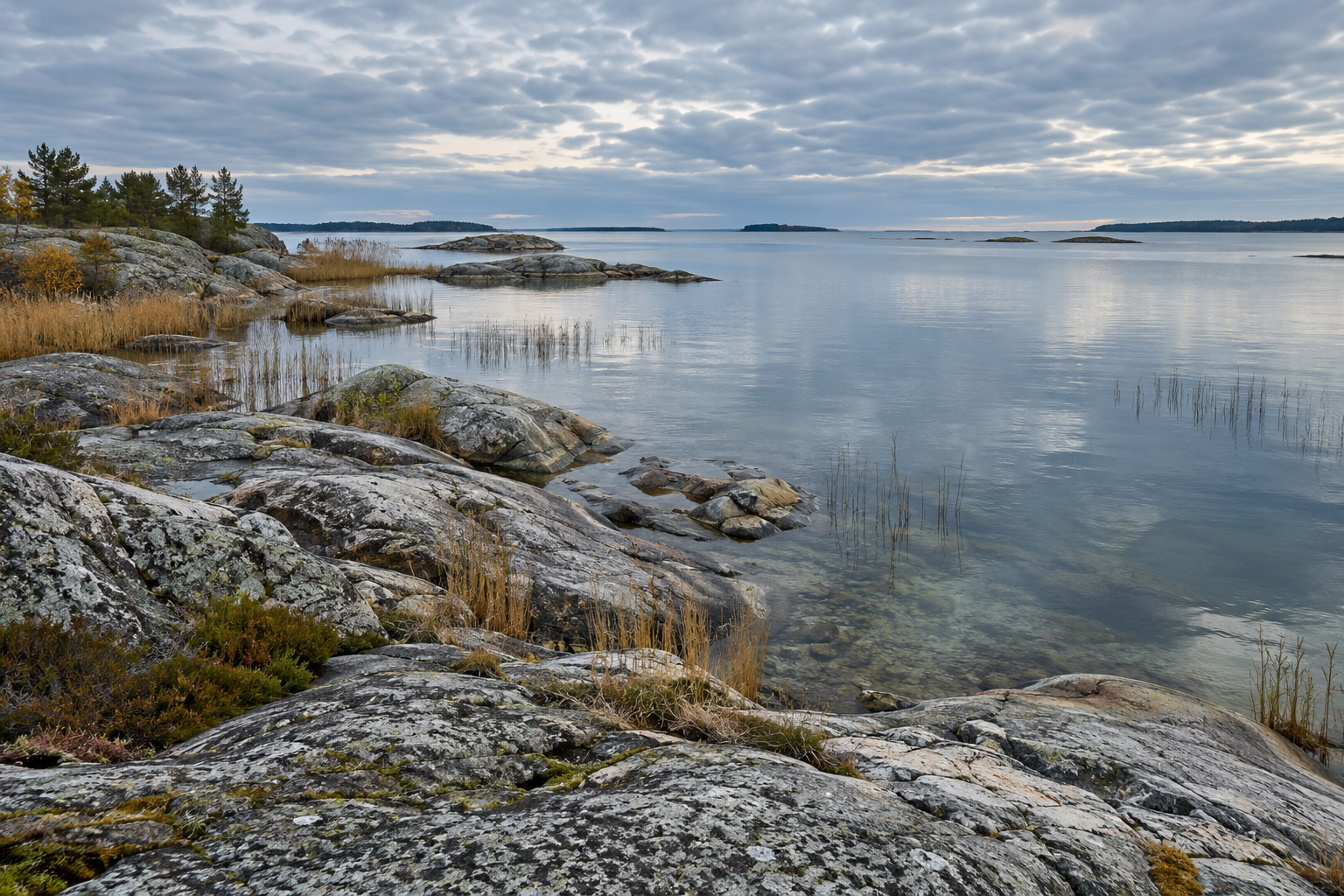
A quiet shore is never quite still. Light, wind and the waterline keep rearranging the same small scene.
Find a place to pause
Pick an accessible stretch of shore and stop well back from the edge. Wet stone can be slippery even when it looks dry. Observe warning signs, local access rules and changing conditions; a peaceful photograph says very little about how safe a shoreline is.
Spend a few minutes looking at the horizon, then at a patch of stone within arm’s reach. The distance between those views is part of what makes a coast feel spacious.
Watch the changing waterline
Choose a rock and watch where water reaches it. A passing boat, a gust of wind or a small change in swell can redraw the border. Note what is actually visible rather than guessing at causes.
Try making a quick sketch with only five lines. One for the horizon, two for the outline of the shore and two for shapes that catch your eye. The limit makes it easier to decide what matters.
Leave the arrangement alone
There is no need to stack stones or move driftwood to improve the view. Those small objects can be shelter for living things. Photograph what you find, take litter away if it is safe to do so and leave the shore ready for the next person.