Return to the same tree
One familiar tree can become a marker for a whole season. Visit it again and let the changes come to you.
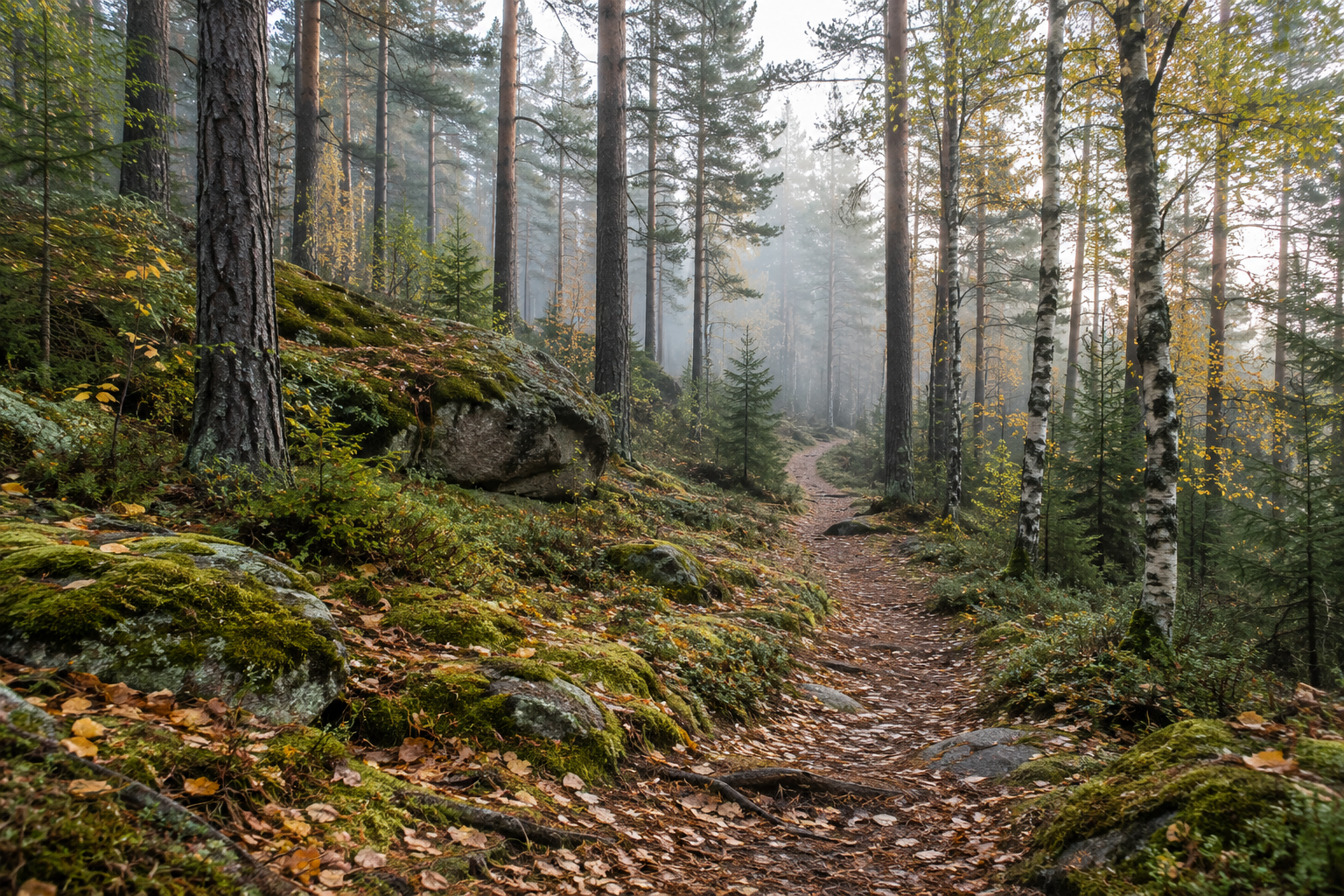
Choose an ordinary neighbour
Find a tree on a public route that you can return to easily. It need not be remarkable. A tree beside a pavement can be as rewarding as one in a woodland. Pick a safe place to stand without blocking a path or entering private land.
Make a short first entry: the shape of the canopy, the condition of the ground and how much light reaches the trunk. Avoid carving, attaching markers or disturbing the bark.
Use the same viewpoint
On later visits, stand in roughly the same place. Notice the colour and density of leaves, the sound in the branches and the shadows on the ground. Photographs from one viewpoint can help, but notes often reveal details the camera misses.
Record the weather as context. A tree in bright sunshine can look like a different species from the same tree in rain. The comparison works best when you leave space for uncertainty.
Look beyond the leaves
Seasonal change happens at ground level too. Watch fallen twigs, footprints in soft earth and the shape of puddles after rain. Leave fungi and insects undisturbed. By returning, you begin to notice not just what changed, but what stayed.