A path without a plan
A short woodland walk does not need a destination. Sometimes the useful part is noticing what changes when you slow down.
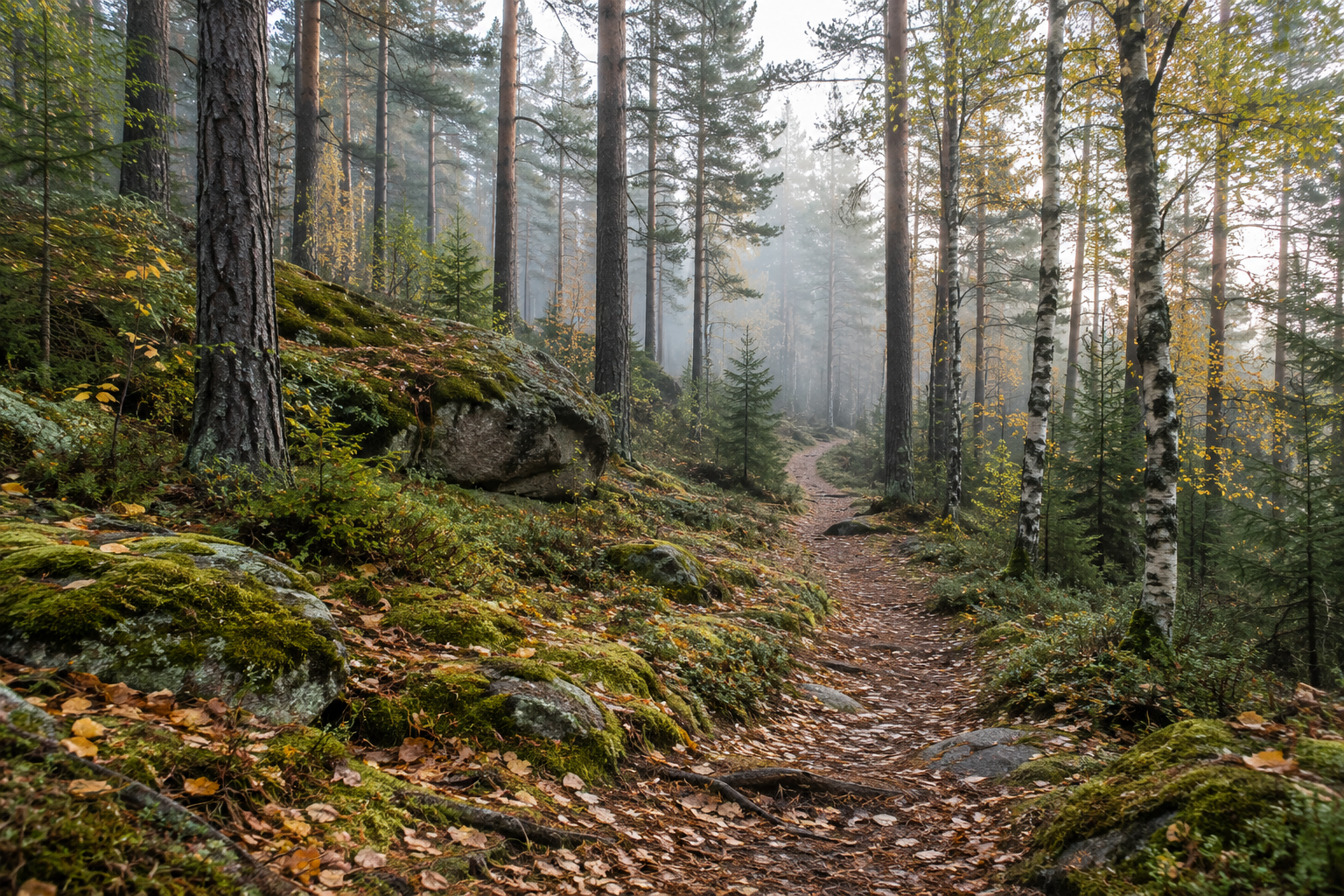
Begin with a small loop
Choose a familiar public path rather than a route that demands a timetable. A loop of twenty minutes is enough. Before you set off, look at a map, check the weather and tell someone where you are going if the area is remote. The point is to take pressure off the walk, not to forget the practical things.
Leave your phone in a pocket for the first few minutes. Listen before you start looking for something interesting. Footsteps sound different on pine needles, gravel and wet leaves; that small change is often the first detail worth writing down.
Look at the edges
The middle of a trail gets most of our attention. Try looking beside it: where moss meets bare soil, where the light reaches a fallen branch, where one species gives way to another. Stay on the established route and leave plants, fungi and dead wood where they are.
Choose one ordinary detail to follow for a while. It might be the pale underside of birch leaves or the way rain hangs from grass. You do not need to identify it. A careful description is a good beginning.
Bring one detail home
At the end, write three sentences: what you saw, what you heard and what you had not noticed before. Add the date and general weather. There is no need to turn every walk into a lesson. A small record is enough to make the next visit feel different.